




How to Use Uninsured and Underinsured Motorist Coverage in Atlanta, Georgia
What You Should Know
After a car accident, many people expect the at-fault driver’s insurance to cover their
losses. In reality, some drivers carry little insurance or none at all. When that happens,
uninsured or underinsured motorist coverage can become an important source of protection.
In Georgia, UM/UIM coverage is designed to help fill the gap when the responsible driver
cannot fully compensate an injured person. Understanding how this coverage works can help
reduce confusion during an already stressful time.
This article provides general information, not legal advice.
What Uninsured and Underinsured Motorist Coverage Is
Uninsured motorist coverage generally applies when the at-fault driver has no liability
insurance. Underinsured motorist coverage may apply when the at-fault driver has insurance,
but the available limits are not enough to cover the injuries and damages involved.
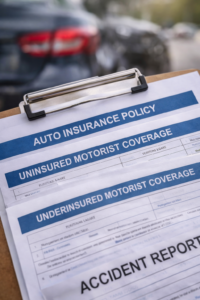
UM/UIM coverage is part of your own auto insurance policy. While Georgia insurers must offer
this coverage, drivers can reject it in writing. As a result, coverage and limits vary from
policy to policy.
How UM/UIM Coverage Is Triggered
UM or UIM coverage does not automatically apply after every accident. It typically comes
into play only after certain conditions are met.
- The at-fault driver is uninsured or lacks sufficient coverage
- The injured person has UM/UIM coverage in effect at the time of the crash
- Required notice is provided to the UM/UIM insurer
- The value of the claim exceeds available liability limits
In many cases, the liability claim against the at-fault driver must be resolved before the
underinsured portion of a claim is addressed.
Georgia Legal Framework
Georgia law allows two primary types of uninsured motorist coverage: “add-on” coverage and
“reduction” coverage. The type of coverage selected can affect how much compensation may be
available.
Georgia also follows a modified comparative negligence rule. An injured person may recover
damages only if they are less than 50% at fault for the accident, and any recovery may be
reduced by their percentage of fault.
UM/UIM claims are subject to specific procedural requirements, including notice provisions
and deadlines that may affect coverage.
Common Questions or Scenarios
People frequently have questions about UM/UIM coverage, including:
- What if the other driver has minimum insurance limits?
- Can I use UM/UIM coverage if I was a passenger?
- Does UM/UIM apply in hit-and-run accidents?
- Do I have to notify my insurer before settling?
- Can multiple policies apply to one accident?
The answers depend on policy language, the facts of the accident, and how Georgia law applies
to the specific situation.
Evidence or Factors That Matter
UM/UIM claims often depend on both insurance documents and accident-related evidence.
| Factor | Why It Matters |
|---|---|
| Insurance policy language | Determines coverage type, limits, and exclusions |
| Liability coverage of the at-fault driver | Establishes whether UM/UIM may apply |
| Medical records | Document the nature and extent of injuries |
| Accident evidence | Supports fault and damages |
| Notice and timing | Affects whether coverage is preserved |
What to Do Next
If UM or UIM coverage may be involved, general steps may include:
- Reviewing your auto insurance policy carefully
- Preserving evidence related to the accident and injuries
- Providing timely notice to all potentially involved insurers
- Being cautious before agreeing to any settlement
UM/UIM claims can involve procedural requirements that affect available coverage.
How C Paul Law Firm P.C. Can Help
C Paul Law Firm P.C. represents individuals navigating complex insurance issues after car
accidents in Atlanta and throughout Georgia, including uninsured and underinsured motorist
claims. We focus on careful policy analysis and clear communication to help clients
understand their options.
Contact C Paul Law Firm P.C. to discuss your situation and understand your legal options.
This article provides general information, not legal advice.